

Start with a relatable problem:
Imagine you’re tackling a little project at home—maybe fixing a loose cupboard hinge, or assembling a brand-new bookshelf. You dig through your toolbox and find a mismatch of screwdrivers, but none seem to work perfectly. It’s frustrating, right? Choosing the right screwdriver can make or break your home repair efforts. That’s why I’ve put together this Essential Guide: How to Choose the Right Screwdriver for Home Repairs.
Understanding the Basics:
First things first, what exactly is a screwdriver? It’s a tool with a handle and a shaft that ends in a tip which you insert into the screw’s head to turn it. Simple enough, but did you know there are many types of screwdrivers? Let’s dig into how you can choose the perfect one for any job around the house.
Types of Screwdrivers:
- Flathead Screwdriver:
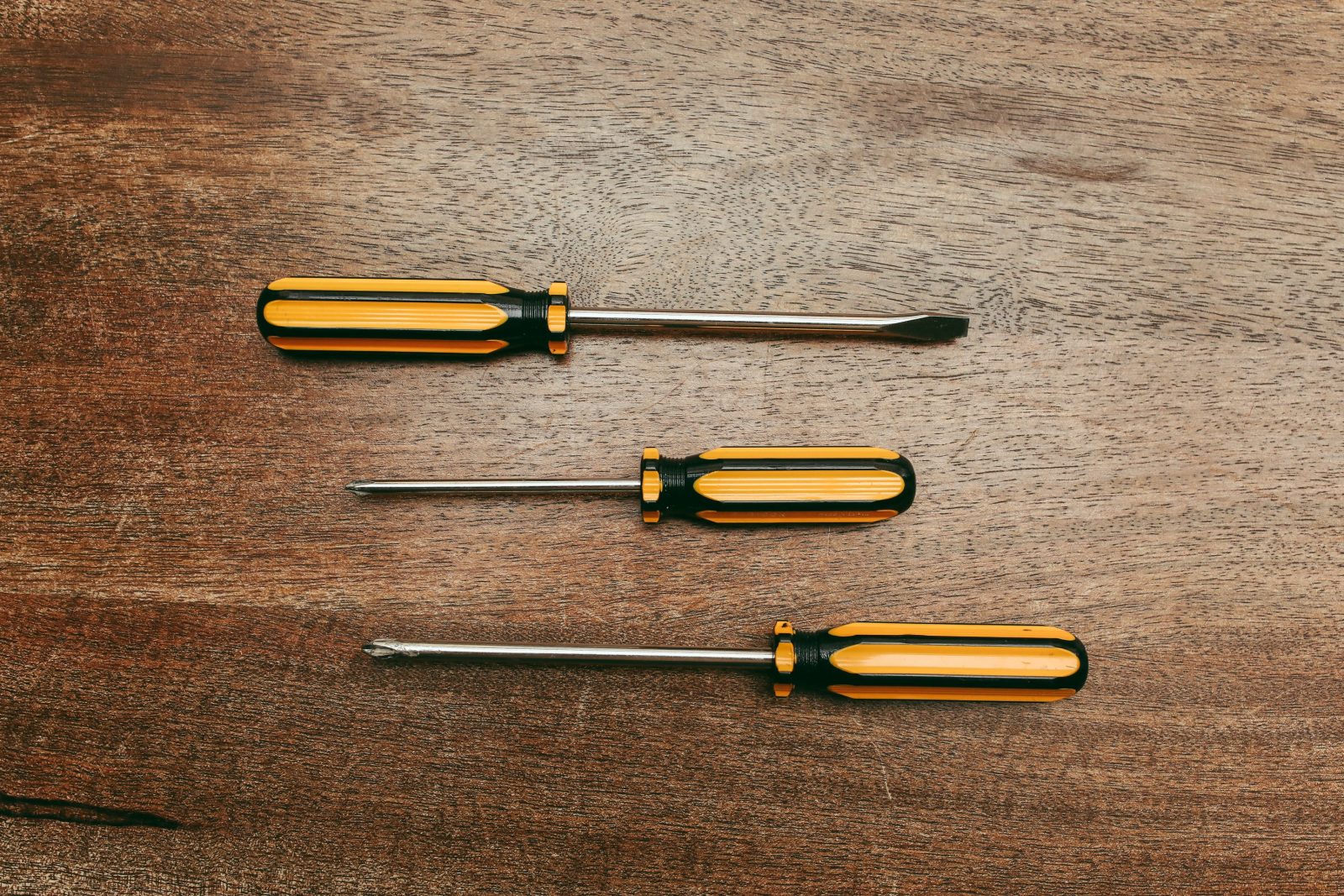
This is perhaps the most common type. It has a flat tip and is used for screws with a straight, horizontal slit. It’s essential for most basic home tasks and is a must-have in any toolkit. - Phillips Screwdriver:
Recognizable by its cross-shaped tip, this screwdriver is used for screws with a cross slot. They provide better grip and torque than the flathead, making them ideal for tighter, more secure connections. - Torx Screwdriver:
With a star-shaped tip, these screwdrivers are becoming increasingly popular, especially for electronic and automotive repairs as they provide high torque transmission and reduce the risk of cam-out (when the screwdriver slips out of the screw head). - Robertson or Square Drive:
These screwdrivers fit screws with a square recess in the head. They’re very common in woodworking as they hold onto the screw snugly, allowing one-handed operation.
Choosing the Right Size and Fit:
Choosing the right size is crucial; a screwdriver that is too big or too small will not fit the screw head properly, making your task harder and potentially ruining the screw. Here’s how to choose the right size:
- Match the tip to the screw head: The tip of the screwdriver should fit snugly into the screw head, with no wiggle room.
- Check the thickness: The thickness of the screwdriver tip should neither be too thick to fit into the slot nor too thin to grip properly.
- Length matters: Longer screwdrivers provide more torque, allowing you to turn screws with less effort. However, in tight spaces, a shorter screwdriver might be more handy.
Considering Screwdriver Quality:
A good screwdriver will feel solid and comfortable in your hand. Choose screwdrivers with a good grip and durable materials. Often, paying a bit more upfront for a quality set can save you money and frustration in the long run.
Maintaining Your Screwdrivers:
Taking care of your tools is just as important as purchasing the right ones. Here are a few maintenance tips:
- Keep them dry: Moisture can rust metal parts, so keep your screwdrivers in a dry place.
- Clean them regularly: Wipe the tips and handles with a clean cloth after use to remove grease and grime.
- Store properly: Organize your screwdrivers in a toolbox or a holder. This keeps them protected and easy to find.
FAQ Section:
- Q: Can I use a flathead screwdriver for all screws?
A: While you might be tempted, using a flathead screwdriver on non-compatible screws can damage both the screw and the tool. Always use the matching screwdriver. - Q: What if I can only afford one screwdriver right now?
A: If you’re tight on budget, start with a multi-bit screwdriver. It comes with interchangeable tips, including flathead and Phillips, suitable for various screws. - Q: How do I know if a screwdriver is of good quality?
A: Look for screwdrivers made from chrome vanadium steel or those offering a comfortable, non-slip handle. Brands often regarded for quality include Stanley, Craftsman, and Klein Tools.
Conclusion:
Choosing the right screwdriver doesn’t have to be complicated. With this Essential Guide: How to Choose the Right Screwdriver for Home Repairs, you’re well on your way to handling home projects like a pro. Remember, a good set of tools not only makes the work easier but also ensures that you do it right. Equip yourself with the right screwdrivers, and see how home repairs can turn from daunting to doable. Plus, it’s a great way to ensure your toolkit can handle any challenge your dwelling throws at you!